

Glancing down at your favorite bracelet, you notice the subtle fade that comes from everyday wear. Keeping jewelry luminous is not just about style—it reflects a sense of care for pieces that hold personal meaning. Fashion-forward women across cities from Paris to New York appreciate how a clean, organized workspace is the foundation for preventing scratches and preserving shine. Discover how simple workspace habits and gentle cleaning can extend the beauty of your jewelry, making each piece as radiant as the day you wore it first.
Table of Contents
- Step 1: Set Up A Clean Workspace For Jewelry Care
- Step 2: Gather Gentle Cleaning Supplies For Safe Maintenance
- Step 3: Perform Careful Cleaning To Remove Dirt And Oils
- Step 4: Inspect Pieces For Damage Or Wear After Cleaning
- Step 5: Store Jewelry Properly To Prevent Tarnish And Scratches
Quick Summary
| Essential Insight | Detailed Explanation |
|---|---|
| 1. Maintain a Clean Workspace | Organize a dedicated space to prevent damage while cleaning jewelry. |
| 2. Use Gentle Cleaning Supplies | Assemble non-toxic, non-abrasive tools to protect your jewelry’s integrity. |
| 3. Clean Jewelry Carefully | Follow specific cleaning methods for different materials to avoid damage. |
| 4. Inspect for Damage Post-Cleaning | Regularly check stones, clasps, and surfaces for wear and potential damage. |
| 5. Store Jewelry Properly | Store pieces separately and avoid harsh environments to prevent tarnishing and scratching. |
Step 1: Set Up a Clean Workspace for Jewelry Care
Creating a dedicated, organized workspace is the foundation for maintaining your jewelry’s sparkle and longevity. When you’re ready to care for your pieces, having a clean and structured environment prevents accidental damage and ensures meticulous attention to detail.
Start by selecting a well-lit, stable surface like a clean table or countertop with ample space. Choose a location away from potential hazards like sinks, open windows, or high-traffic areas where pieces might get knocked over. Workspace safety guidelines recommend keeping your area uncluttered and organized.
Prepare your workspace with these essential items:
- Soft, lint-free microfiber cloths
- Clean white towel or soft mat for laying out jewelry
- Small containers or soft pouches for individual piece storage
- Gentle jewelry cleaning solutions
- Cotton swabs or soft-bristled brushes
- Tweezers with padded tips
A clean, organized workspace is your first line of defense against potential jewelry damage.
Ensure your workspace maintains a consistent temperature and humidity level. Archival preservation techniques emphasize controlling environmental conditions to prevent tarnishing and material degradation. This means avoiding direct sunlight, heating vents, or areas with significant temperature fluctuations.
Pro tip: Cover your workspace with a clean, white cloth to provide a neutral background and catch any small pieces that might accidentally slip during cleaning.
Step 2: Gather Gentle Cleaning Supplies for Safe Maintenance
Preparing the right cleaning supplies is crucial for maintaining your jewelry’s brilliance and integrity. Your goal is to collect tools that clean effectively without causing any damage to your precious pieces.
Start by assembling a collection of safe cleaning materials that will protect your jewelry during maintenance. Your essential toolkit should include:
- Soft microfiber cloths
- Gentle, non-toxic cleaning solutions
- Soft-bristled toothbrush or specialized jewelry brush
- Distilled water
- Lint-free cotton swabs
- Soft, clean white towels
- Protective rubber or nitrile gloves
Professional jewelers recommend using only non-abrasive, chemical-free cleaning solutions to preserve your jewelry’s shine.
Pay special attention to selecting cleaning agents. Safe cleaning protocols emphasize using non-toxic, non-corrosive products that won’t harm delicate metals or gemstones. Avoid harsh chemicals like chlorine or ammonia, which can strip protective coatings and damage your jewelry.
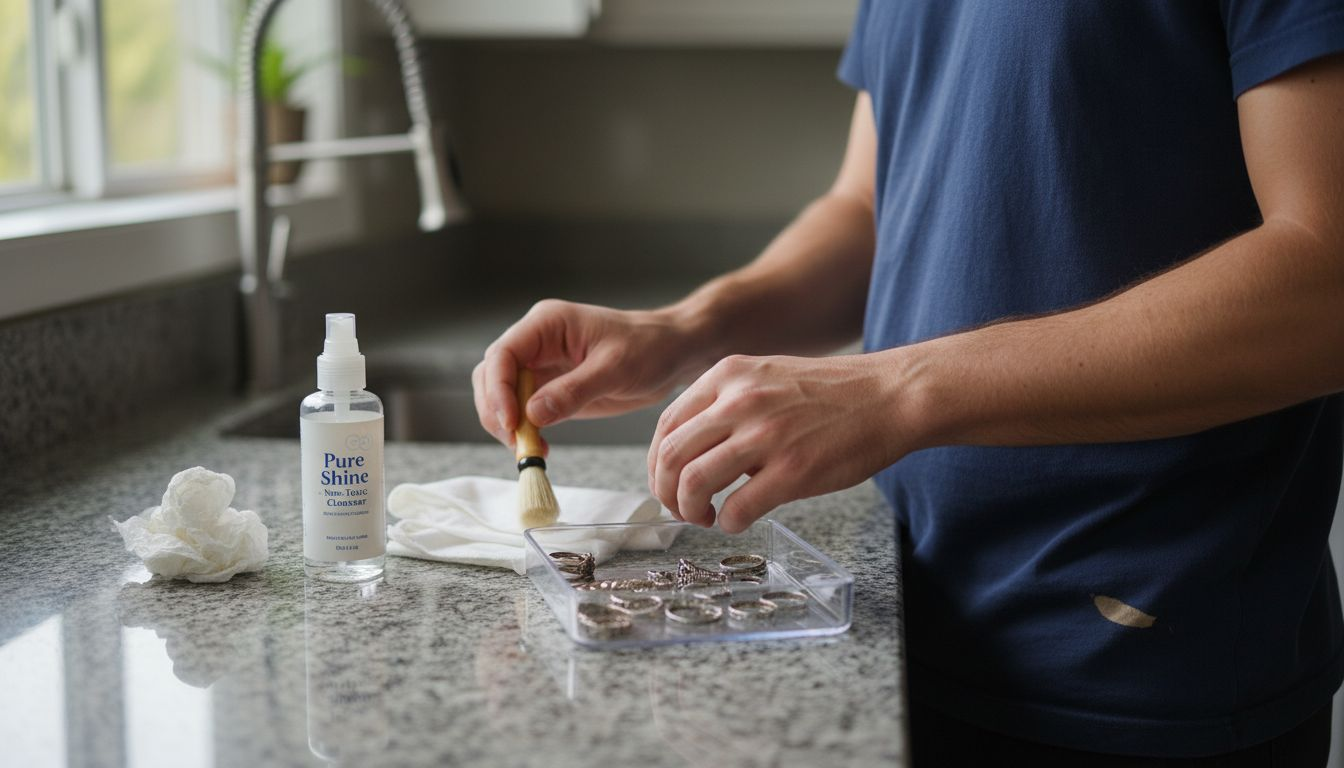
Pro tip: Always test cleaning solutions on a small, inconspicuous area of your jewelry first to ensure compatibility and prevent potential damage.
Step 3: Perform Careful Cleaning to Remove Dirt and Oils
Now that you have your cleaning supplies ready, it’s time to gently restore your jewelry’s natural brilliance by removing accumulated dirt, oils, and daily grime. Your goal is to clean thoroughly without causing any scratches or damage to your precious pieces.
Begin by preparing your cleaning technique with a systematic approach. First, create a gentle cleaning solution by mixing a few drops of mild dish soap with warm (not hot) water. Follow these careful cleaning steps:
- Dip a soft microfiber cloth into the solution
- Gently wipe each piece, paying attention to crevices
- Use a soft-bristled brush for hard-to-reach areas
- Rinse with clean, cool water
- Pat dry with a lint-free cloth
Gentle mechanical cleaning prevents damage while effectively removing surface contaminants.
For delicate pieces like pearls or soft gemstones, alternative cleaning methods are crucial. Avoid submerging these pieces completely. Instead, use a barely damp cloth and minimal moisture to prevent potential damage. Silver pieces might require special attention to prevent tarnishing, so consider using a specialized silver cleaning cloth for best results.
Pro tip: Always clean jewelry over a soft towel or closed sink to prevent accidental drops and protect delicate pieces from potential damage.
Here’s how jewelry cleaning methods differ by material sensitivity:
| Jewelry Type | Best Cleaning Method | Cleaning Frequency |
|---|---|---|
| Gold & Platinum | Mild soap, soft brush | Once per month |
| Silver | Silver cloth, avoid soaking | Every 2-3 weeks |
| Pearls | Damp cloth, minimal water | After each wearing |
| Gemstones | Distilled water, soft brush | Monthly or as needed |
Step 4: Inspect Pieces for Damage or Wear After Cleaning
After carefully cleaning your jewelry, the next critical step is conducting a thorough inspection to identify any potential damage or wear that might compromise your pieces’ beauty and structural integrity. Think of this as a detective mission for your most treasured accessories.
Begin by examining jewelry for hidden damage using good lighting and ideally a magnifying glass. Check these key areas systematically:
- Stone settings: Look for loose or shifting stones
- Clasps and connections: Inspect for weakening or bending
- Metal surfaces: Search for scratches, corrosion, or discoloration
- Prong integrity: Verify prongs remain secure and aligned
- Chain links: Check for wear, stretching, or potential breakage points
Early detection of subtle damage can prevent costly repairs and potential loss of precious jewelry.
For delicate or high-value pieces, professional damage assessment techniques recommend using specialized magnification tools. Pay special attention to intricate design elements and connection points where stress can accumulate over time. Silver and softer metals require extra scrutiny for signs of structural weakness.
Pro tip: Keep a small notebook or digital log documenting each piece’s condition during inspections to track changes and maintenance needs over time.
Step 5: Store Jewelry Properly to Prevent Tarnish and Scratches
Protecting your jewelry during storage is just as important as cleaning it. Your goal is to create a safe environment that preserves the beauty and integrity of each piece, preventing unnecessary wear and potential damage.
Start by implementing strategic storage solutions that shield your jewelry from environmental threats. Your storage strategy should focus on individual protection and controlled conditions:
- Use soft, individual pouches for each piece
- Select a storage container with compartments
- Avoid storing pieces where they might rub against each other
- Keep jewelry away from direct sunlight and heat sources
- Maintain a consistent, moderate temperature and humidity level
Careful storage is your jewelry’s first line of defense against tarnish and degradation.
For long-term preservation, advanced preservation techniques recommend using acid-free tissue paper between pieces and selecting storage containers with soft, non-reactive linings. Separate metal types to prevent chemical interactions, and consider using silica gel packets to control moisture in your storage area. Silver pieces, in particular, benefit from anti-tarnish strips that absorb harmful environmental elements.
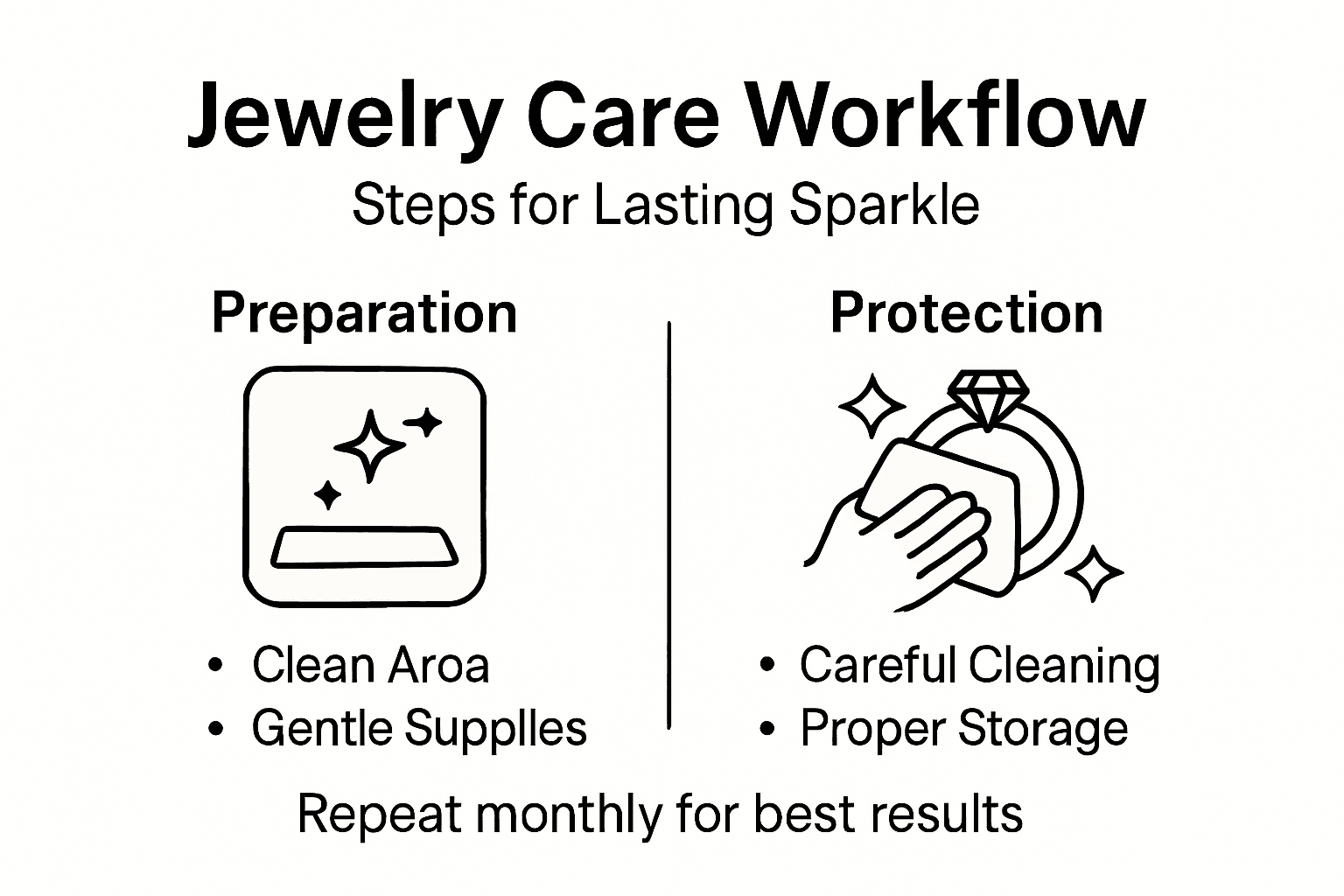
Key storage strategies by metal type for optimal preservation:
| Metal Type | Recommended Storage | Key Protection Tip |
|---|---|---|
| Silver | Anti-tarnish pouch | Add silica gel packets |
| Gold | Soft-lined box | Store items separately |
| Platinum | Velvet compartment | Avoid direct sunlight |
| Mixed metals | Acid-free paper wrap | Separate by composition |
Pro tip: Create a dedicated jewelry storage area away from bathrooms, kitchens, and direct sunlight to minimize exposure to moisture, chemicals, and temperature fluctuations.
Keep Your Jewelry Radiant with Everyday Luxury from SammiBee
Maintaining your jewelry’s lasting sparkle can feel challenging with the risks of scratches, tarnish, and wear over time. This guide highlights the importance of a clean workspace, gentle cleaning supplies, and proper storage to protect your treasured pieces. At SammiBee, we understand these key pain points and design each piece with durability and effortless elegance in mind so your jewelry stays beautiful through daily wear and careful care.

Elevate your collection with our curated Earrings and Bundles crafted from high-quality materials like sterling silver and brilliant cubic zirconia. Explore timeless designs made for everyday comfort and versatility that are as easy to maintain as they are stunning to wear. Visit SammiBee Jewelry today for affordable luxury pieces backed by free U.S. shipping and a 30-day hassle-free return policy. Start your journey to jewelry that shines longer and feels truly special.
Frequently Asked Questions
How can I set up a clean workspace for jewelry care?
To create a clean workspace for jewelry care, choose a well-lit and stable surface, like a clean table or countertop, free from potential hazards. Ensure the area is organized, and keep essential items like microfiber cloths, soft mats, and gentle cleaning solutions readily available.
What cleaning supplies do I need for jewelry maintenance?
Gather gentle cleaning supplies such as soft microfiber cloths, non-toxic cleaning solutions, and soft-bristled brushes. Assemble your toolkit with these essentials to clean effectively while protecting your jewelry’s brilliance.
How do I properly clean my jewelry without damaging it?
To clean jewelry gently, mix a few drops of mild dish soap with warm water and use a soft microfiber cloth to wipe the pieces. Pay attention to crevices and rinse with cool water, then pat dry with a lint-free cloth to maintain its shine.
What should I look for when inspecting my jewelry after cleaning?
Inspect your jewelry for hidden damage by checking stone settings, clasps, and metal surfaces in good lighting. Look for any signs of wear, scratches, or loose stones to catch potential issues early and avoid costly repairs.
How can I store my jewelry to prevent tarnish and scratches?
Store your jewelry using soft pouches or compartments to prevent it from rubbing against other pieces. Ensure to keep the storage area away from direct sunlight and heat sources to maintain a consistent environment, reducing tarnish risks.
How often should I clean and inspect my jewelry?
Aim to clean gold and platinum jewelry once a month, while silver should be cleaned every 2-3 weeks. Inspect your pieces regularly to catch any potential damage before it worsens, ideally during each cleaning session.